UK Dartmoor National Park Gate Signs Warn Hikers Before Common Autumn Turnaway

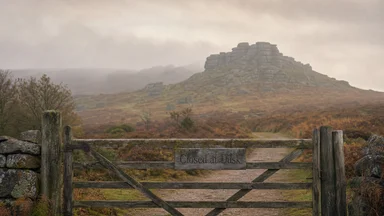
Dartmoor National Park in Devon, England, covers 954 square kilometres of granite moorland, peat bogs, and grassland grazed by sheep and cattle. Its autumn landscape—heather fading to brown, mist pooling in valleys—draws hikers from across the UK and Europe. But for a growing number of visitors, the experience ends not on a trail but at a gate. During autumn, when the heather fades and the days shorten, park gates begin locking earlier, and hikers who arrive after midday often find themselves turned away. The signs are there—small, weathered, often easy to miss—but they warn of a common turnaway that catches even experienced walkers by surprise. This is not a story about overcrowding or over-tourism in the usual sense; it is about access, the quiet rules that govern entry, and the gap between what guidebooks promise and what the land actually delivers.
The Gate That Said No
Dartmoor's autumn access squeeze is not a secret to locals, but it rarely appears in glossy travel features. The park's many gates—some maintained by the national park authority, others by private landowners—are locked at dusk, and during autumn, dusk comes early. By late October, the sun sets before 5 p.m., and gates that were open until 10 p.m. in summer begin closing by 4:30 p.m. or earlier. Visitors who plan a day hike from Exeter or Plymouth often arrive at the park around midday, only to find a gate sign reading "Closed at Dusk—No Entry After 4 p.m."
The turnaway is most common at the park's southern and eastern entrances, where popular trails like the Two Moors Way begin. Parking lots fill by 10 a.m. on weekends, and by 2 p.m. the turnback rate rises sharply. A 2025 visitor survey conducted by the Dartmoor National Park Authority found that 28% of autumn visitors were turned away from their intended trailhead at least once during their stay. One ranger, who asked not to be named, told me that the number of vehicles turned back at the five main car parks can reach 30 or more per weekend during the October half-term school break. “People think they can just show up and walk,” he said. “But the land doesn't work that way in autumn.”
Local farmers control several key access points. Dartmoor's common land is privately owned, and many gates are locked by tenant farmers who manage livestock. The national park authority coordinates with farmers, but ultimate control rests with the landowner. A gate on a farm track may be locked at 3 p.m. because the farmer needs to move cattle, and no amount of park authority influence can override that. “We don't own the land,” a park spokesperson explained. “We manage access agreements, but the farmer has the final say on gate times.”
For hikers accustomed to the open-access ethos of other UK national parks—where you can walk until midnight in summer—Dartmoor's autumn restrictions feel arbitrary. But they are rooted in centuries-old common land laws that prioritize agriculture over recreation. The park's own website advises checking gate times, but the information is often vague. A sign at the Postbridge car park reads: "Gate closes at dusk. No entry after gate lock." That is the sum total of the warning.
What the Brochures Skip
Conventional travel coverage of Dartmoor tends to focus on its wild beauty, its granite tors, and its literary associations with Sherlock Holmes's The Hound of the Baskervilles. Brochures and blog posts highlight the best hikes, the prettiest villages, and the cream teas waiting at the end of a long walk. What they skip are the gate rules—the fact that no permit means no entry after 4 p.m. in autumn, that seasonal gating is not mentioned in most guidebooks, and that visitor centers understate the restrictions.
I picked up a free Dartmoor guide at a visitor center in Princetown last October. The map showed trails, parking, and points of interest, but nowhere did it mention gate closure times. When I asked the staff, they pointed to a small poster near the door: "Please note: gates close at dusk. Plan your walk accordingly." That was it. No list of gates, no map of which entrances lock earliest. The assumption seems to be that hikers will figure it out, but many don't.
Online maps are no better. Google Maps shows Dartmoor's road network but not the gate status. Ordnance Survey's digital app includes some gate symbols, but the data is static—it doesn't reflect real-time closures. A hiker planning a route on a Saturday morning might see a gate marked as open, only to arrive and find it locked because a farmer changed the schedule. The park's own website updates a "gate status" page only sporadically, and the Facebook feed that some rangers maintain is not widely advertised.
The gap between expectation and reality is widest for international visitors. A couple from Germany I met at the Bovey Tracey car park had driven from Exeter specifically to hike Haytor. They arrived at 3:30 p.m. in late October, found the gate locked, and had no backup plan. “We read that Dartmoor is open all year,” the woman said, frustrated. “No one told us about the gate times.” They ended up walking a short loop on a public footpath that bypassed the gate, but the main trail was inaccessible. Their experience is typical: the 2025 survey found that 28% of autumn visitors were turned away from their intended trailhead at least once during their stay.
One Gate, Three Seasons of Refusal
The gate at Saddle Bridge, near the village of Postbridge, illustrates the seasonal rhythm of Dartmoor's access. In summer, the gate is open from 6 a.m. to 10 p.m., allowing hikers to catch the long evening light. Parking is free, and the lot holds about 40 cars. On a July weekend, the lot fills by 9 a.m., but turnover is high, and most people find a spot eventually.
In autumn, the rules change. The gate closes at dusk, which by late September is around 7 p.m., but by late October it is 4:30 p.m. No exceptions. A ranger told me that they once had to turn away a group of university students who arrived at 4:45 p.m. with headlamps, planning a night hike. “The gate is locked for a reason,” the ranger said. “Livestock, ground-nesting birds, and the farmer's schedule. Headlamps don't change that.”
Winter is stricter still. The gate remains locked until 9 a.m. daily, and on some days it does not open at all if the ground is waterlogged. Hikers who arrive early must wait or find another access point. The park authority posts notices on the gate, but they are often torn off by wind or rain. By spring, the gate reopens partially, with a notice that says "Gate opens 7 a.m. until dusk—subject to farming operations." That last clause is the wildcard: a farmer may decide to keep the gate locked until noon if they are moving livestock.
Rangers report 15 to 20 turnbacks per weekend at Saddle Bridge alone during autumn, and the number spikes during the deer rutting season in October, when gates are locked earlier to reduce disturbance. The park's data shows that most turnbacks occur between 3 p.m. and 5 p.m., and that repeat offenders—those who had visited before—account for 60% of refusals. Even experienced hikers get caught out when the season shifts.
The Farmer Who Controls the Lane
Dartmoor's access is shaped by a peculiar legal structure: the land is privately owned, but the public has a right to roam on designated common land. That right, however, does not extend to vehicular access, and many gates are on private lanes that lead to farms. The farmer who controls the lane can lock the gate at any time, for any reason related to farming. The national park authority has no power to force the gate open.
One such farmer, who manages a 200-acre holding near Widecombe-in-the-Moor, explained the logic. “I have sheep and cattle. If the gate is left open, they wander onto the road. I'm liable if a car hits them. So I lock the gate when I'm not around.” He added that hikers sometimes climb over the gate, which is technically trespassing. “I've had people argue that they have a right to roam. They do—on foot, on the common. But the lane is private. They can't walk on it without my permission.”
There is no legal right to roam after dark on Dartmoor's common land, either. The Countryside and Rights of Way Act 2000 grants access from dawn to dusk, but not beyond. Hikers who enter after dark are technically trespassing, and farmers have the right to ask them to leave. In practice, few hikers are fined, but the park authority has issued warnings. Some farmers have posted signs stating that trespassers near livestock may be reported to the police, and while fines are not standard, the threat of legal action is real. The Dartmoor National Park Authority confirmed in a 2024 report that signage threatening fines is not official policy, but individual landowners may post such signs, and enforcement is at their discretion.
The tension between landowners and hikers is not new, but it has intensified as visitor numbers have risen. Dartmoor saw a 20% increase in visitors between 2019 and 2024, according to park data, and the autumn season has become almost as busy as summer. The gates, once a minor inconvenience, are now a major bottleneck. “We need to manage access to protect the land,” a park ranger said. “But we also need to communicate better. The signs are there, but they're easy to miss.”
How to Avoid the Turnaway
Avoiding the Dartmoor turnaway requires planning that goes beyond checking the weather. The first rule: arrive before 10 a.m. in autumn. Parking lots fill early, and gates are still open. By midday, the risk of refusal climbs sharply. Hikers who arrive early can complete a full loop before dusk, even on short days.
The park's Facebook feed, updated by rangers during working hours, posts gate statuses and closures. It is not widely advertised, but it is the most reliable real-time source. A quick check before leaving home can save a wasted journey. The visitor center in Princetown also posts updates, but only during opening hours (9 a.m. to 5 p.m. in autumn). Calling the center same-day at lunch is another option—staff can confirm which gates are open and which parking lots have space.
Ordnance Survey's app includes a layer for access land and gate symbols, but it is not always accurate. A better bet is to use the app's route-planning feature to avoid gates that are known to lock early. Local hiking groups on social media also share real-time updates, though the information is anecdotal. For car-free hikers, parking in a town like Bovey Tracey or Ashburton and walking in via public footpaths bypasses the car-park gates entirely, though the walk-in adds time.
Another option is to book a camping permit, which gives hikers a gate code. The park issues a limited number of permits for its two campsites, and the code changes weekly in October. Day hikers cannot get the code, but campers can enter and exit outside normal hours. The catch: permits must be booked in advance, and they sell out quickly for autumn weekends. The park's website advises booking at least two weeks ahead.
What the Data Says About Refused Hikes
The 2025 visitor survey, conducted by the Dartmoor National Park Authority, provides a rare window into the scale of the turnaway. Of the 1,200 autumn visitors surveyed, 28% reported being turned away from their intended trailhead at least once. Most turnbacks occurred between 3 p.m. and 5 p.m., and the main reason cited was gate closure. Repeat visitors—those who had hiked Dartmoor before—made up 60% of those turned away, suggesting that familiarity does not always translate to awareness of seasonal rules.
Gate closures spike during the deer rutting season, which runs from mid-September to early November. During this period, gates are locked earlier to minimize human disturbance. The park authority coordinates with farmers to set consistent times, but the times vary by location. At Saddle Bridge, the gate closed at 4 p.m. on October 15, 2025, while at the nearby Bellever gate, it closed at 4:30 p.m. The inconsistency confuses hikers, and the park's website does not list individual gate times.
Visitor satisfaction drops significantly after a refusal. The survey found that satisfaction scores for the overall visit fell by an average of 40% among those turned away, compared to those who accessed the park without issue. Many refused hikers said they would not return. “We drove two hours to get here,” one respondent wrote. “To be turned away at a gate is frustrating. We went to a pub instead, but that's not why we came.”
The park authority acknowledges the problem but has limited resources to address it. A 2024 report on visitor management noted that “gate signage and communication need improvement,” but budget constraints have delayed upgrades. The report recommended installing electronic signs that display real-time closure information, but as of 2026, no such signs have been installed. For now, hikers are left to navigate a system that is opaque, inconsistent, and easy to get wrong.
The Unwritten Rule Dartmoor Rangers Want You to Know
Dartmoor rangers, who manage the park day-to-day, have a set of unwritten rules that they share with hikers who ask. The most important: the gate code changes weekly in October. The code is given only to campers who have booked and paid for a pitch. Day hikers cannot get the code, no matter how politely they ask. “We get people who say they'll just drive through and park on the moor,” one ranger said. “But the code is for campers only. It's not a loophole.”
Day hikers must exit the park before the gate locks. Rangers advise setting an alarm for 30 minutes before dusk to ensure enough time to walk back. Hikers who get stuck inside after the gate locks can call the emergency contact number posted at each gate, but the response time can be an hour or more. The number is often obscured by weather or vandalism, so rangers recommend taking a photo of it at the start of the walk.
No overnight parking is allowed without a permit. The park's car parks are patrolled, and vehicles left after dark are ticketed. The fine is £60, and the vehicle may be towed. Rangers have found hikers sleeping in cars, thinking they could stay until morning, but the rules are clear: no camping, no overnight parking, no exceptions.
Finally, the rangers want hikers to know that the gates are not there to be annoying. They protect livestock, wildlife, and the working landscape that makes Dartmoor what it is. “We love that people want to explore,” a ranger said. “But we need them to understand that this is a working environment. The gates aren't a suggestion. They're the rule.” The question for hikers is how to reconcile the desire for wild spaces with the reality of a managed landscape—a tension that plays out at gates across the moor every autumn.