Late Hostel Breakfast in Oslo Costs the Same as Two Guesthouse Eggs Cooked

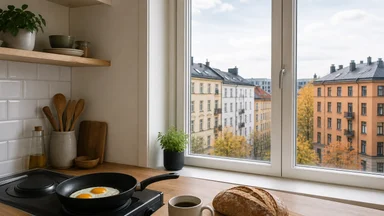
Oslo in late autumn smells of wet stone, pine, and the faint salt of the fjord. The city is compact enough to walk across in an hour, but the real test for the traveler is not distance—it's the kroner. A hostel breakfast buffet, with its cold cuts, bread, and weak coffee, runs about 150 to 200 NOK. A guesthouse kitchen, on the other hand, lets you boil two eggs for roughly 10 NOK. That gap—between convenience and cost—defines the lodging choice in Norway's capital. Over a week, the difference adds up to more than a night's accommodation.
The Kroner Gap: Why a Hostel Breakfast Costs More Than a Guesthouse Egg
Oslo's hostel breakfasts are a standard offering: a buffet of bread, cheese, cold cuts, cereal, and coffee. Prices at hostels like Anker Hostel or the HI Oslo Haraldsheim typically land between 150 and 200 NOK per person. For a single traveler, that's a significant chunk of a daily budget. Meanwhile, a guesthouse or short-let kitchen lets you buy a dozen eggs at Rema 1000 for around 30–40 NOK. Two eggs cost about 10 NOK. Add coffee, bread, and butter, and you're still under 30 NOK for a filling breakfast.
The hostel charges for convenience—no shopping, no cooking, no cleaning. But the quality rarely matches the price. The bread is often pre-sliced white, the cheese processed, and the coffee from a machine. At a guesthouse, you can buy a loaf of whole-grain bread, a block of Jarlsberg, and a bag of freshly ground coffee for roughly the same as one hostel breakfast. Over three days, the savings from self-catering can cover a museum entry or a ferry ride to the islands.
Critics argue that hostel breakfasts save time and hassle, especially for short stays. If you're in Oslo for one night and need to catch an early train, the buffet is efficient. But for longer stays, the math flips. A guesthouse kitchen also allows you to pack lunch for day trips—sandwiches, fruit, and a thermos of coffee—avoiding the 120–180 NOK price of a basic café lunch. The kroner gap is not just about breakfast; it's about the entire food budget.
Some hostels now offer reduced rates without breakfast, around 50–100 NOK less per night. But even then, a guesthouse private room with kitchen access often works out cheaper for stays of three nights or more. The trade-off is clear: pay for convenience or invest a little time and save significantly.
Oslo's Lodging Triangle: Sentrum, Grünerløkka, and the Transit Shed
Oslo's accommodation options cluster in three main areas: Sentrum (city center), Grünerløkka (trendy east side), and the transit shed neighborhoods like Majorstuen and Sagene. Sentrum hostels, such as the Anker Hostel or the Citybox Oslo, offer dorm beds from 400 to 600 NOK per night. Private rooms in guesthouses in Grünerløkka, like the Cochs Pensjonat or the Saga Oslo, range from 800 to 1200 NOK. Short-let studios in Majorstuen or Sagene, booked through platforms like Airbnb or Finn.no, typically run 1000 to 1500 NOK per night.
The T-bane (metro) connects all three areas in under 15 minutes. Sentrum is central but noisy and expensive for food. Grünerløkka has cafes, parks, and the river Akerselva, but guesthouses there are often older buildings with shared bathrooms. Majorstuen offers quieter streets and proximity to the Vigeland Sculpture Park, but short-lets require a week-long commitment and can feel isolated at night. The transit shed—the area within a 15-minute T-bane ride from the city center—includes neighborhoods like Tøyen, Bislett, and St. Hanshaugen, where guesthouses and short-lets are cheaper but require a transport pass.
For a week-long stay, a guesthouse or short-let often ends up cheaper than a hostel dorm when you factor in breakfast and dinner costs. A dorm bed at 500 NOK per night for 7 nights totals 3500 NOK. Add breakfast at 150 NOK per day (1050 NOK) and dinner out at 250 NOK (1750 NOK), and the total reaches 6300 NOK. A guesthouse private room at 1000 NOK per night (7000 NOK) with self-catered meals at 150 NOK per day (1050 NOK) totals 8050 NOK—but you get privacy, quiet, and better food. The gap narrows if you eat cheaply, but the comfort difference is stark.
Some travelers prefer hostels for social reasons. The common rooms, organized pub crawls, and shared kitchens (though often basic) can justify the cost. But for those who value sleep and a quiet space to work or read, the guesthouse wins. The key is to choose based on your priorities, not just the nightly rate.
Three Days in Oslo at a Humane Pace: Hostel vs Guesthouse Budget
A three-day trip to Oslo is enough to see the main sights: the Viking Ship Museum, the Munch Museum, the Holmenkollen ski jump, and a walk along the Aker Brygge waterfront. But the pace matters. A humane itinerary includes time for a leisurely coffee, a stroll in a park, and an evening reading in your room. That means your lodging choice affects your experience.
For a solo traveler, a hostel dorm for three nights costs 1200 to 1800 NOK total. Adding hostel breakfast for three days at 150 NOK each brings the food cost to 450–600 NOK. A basic lunch at a café costs 120–180 NOK, and a simple dinner at a restaurant runs 200–300 NOK. Assuming two meals out per day (lunch and dinner) at an average of 200 NOK each, that adds 1200 NOK over three days. Total: around 2850–3600 NOK. A guesthouse private room for three nights costs 2400 to 3600 NOK. Self-catering breakfast, lunch, and dinner for three days might total 300–500 NOK. Total: 2700–4100 NOK. The guesthouse option is slightly higher but provides a private room and better food.
The trade-off becomes clearer when you consider that a hostel dorm often means sharing a room with four to eight strangers. Earplugs and an eye mask are essential. In a guesthouse, you have your own space, and many have small kitchenettes. You can cook a simple pasta dinner for 50 NOK instead of eating out. Over three days, that saves 450–600 NOK, offsetting the higher room cost.
For a couple or two friends sharing a guesthouse room, the cost per person drops significantly. A double room at 1200 NOK per night becomes 600 NOK per person, comparable to a hostel dorm. With self-catering, the per-person cost can be lower than a hostel. The social aspect of hostels remains a draw, but for those who prefer quiet, the guesthouse is a strong alternative.
The Short-Let Trap: Weekly Rates That Lure You into Suburbia
Short-let apartments, often listed on Airbnb or Finn.no, promise lower weekly rates. A studio in Sagene or along the Sognsvann line might cost 5000 to 7000 NOK per week. That sounds cheap compared to a guesthouse at 1000 NOK per night (7000 NOK weekly). But the trap is the minimum stay: most short-lets require a full week, with no flexibility for shorter trips. If you arrive on a Wednesday and leave on a Tuesday, you still pay for seven nights.
Moreover, short-lets in outer neighborhoods like Sagene or Kjelsås are 20 minutes by bus or tram from the city center. The transit pass costs around 400 NOK per week, adding to the budget. The neighborhood itself may lack corner shops; you might need to plan grocery trips carefully. Some short-lets are in residential blocks with no nearby restaurants, so you're reliant on cooking every meal.
Guesthouses in Grünerløkka or Majorstuen, by contrast, are often within walking distance of supermarkets, cafes, and parks. You can book for three nights or seven without penalty. The price per night is higher, but the location and flexibility justify it. For a 14-day trip, a short-let might save 2000–3000 NOK compared to a guesthouse, but only if you use the kitchen for most meals and don't mind the commute.
Some travelers enjoy the suburban experience—quiet streets, local life, and a sense of living like a resident. But for first-time visitors, the convenience of central lodging often outweighs the savings. The short-let trap is real: the weekly rate looks good, but the hidden costs of transport, time, and isolation can erode the benefit.
Why the Guesthouse Kitchen Beats the Hostel Buffet Every Time
A guesthouse kitchen typically includes a full stove, refrigerator, sink, pots, pans, and utensils. You can cook eggs, porridge, or pancakes for breakfast. You can prepare a packed lunch with sandwiches, fruit, and a thermos of coffee. In the evening, you can make a hot meal—pasta with sauce, a stir-fry, or even a simple fish dish—from ingredients bought at Rema 1000 or Kiwi. The cost per serving is about 50 to 100 NOK, compared to 200–300 NOK for a restaurant meal.
Hostel breakfast buffets, on the other hand, offer limited variety: cold cuts, cheese, bread, cereal, and coffee. The coffee is often weak, and the bread is pre-sliced white. You cannot cook eggs or make porridge unless the hostel has a separate kitchen, which many do not. The buffet is designed for speed, not quality. Over a week, the monotony can be draining.
Guesthouse kitchens also allow you to cater to dietary needs. If you are vegetarian, gluten-free, or lactose-intolerant, you can buy exactly what you need. Hostel buffets rarely offer alternatives beyond the standard spread. For travelers with specific requirements, self-catering is not just cheaper—it's necessary.
The social aspect of hostel kitchens is sometimes cited as a benefit. But guesthouse kitchens are often shared among a few rooms, so you still meet people, albeit in smaller numbers. The difference is that you can cook a proper meal rather than reheat a frozen pizza. For the budget-conscious traveler, the guesthouse kitchen is a tool for saving money and eating well.
The 14-Day Itinerary: Oslo as a Base, Not a Checklist
A two-week stay in Oslo allows you to explore beyond the city center: the Bygdøy Peninsula with its museums, the Vigeland Sculpture Park, the Holmenkollen ski jump, and day trips by T-bane to the forests of Nordmarka or the islands of the Oslofjord. The key is to use Oslo as a base, not a checklist. A humane pace means spending mornings exploring and afternoons relaxing, with time for cooking and reading.
For the first week, a guesthouse in Grünerløkka works well. You can self-cater, walk to the river, and take the T-bane to the city center in 10 minutes. The cost for a private room is around 7000–8400 NOK for the week. Food self-catered runs about 1000–1500 NOK. Total: 8000–9900 NOK. For the second week, consider a short-let in Majorstuen, closer to Bygdøy and the Vigeland Park. A studio might cost 5000–7000 NOK, with food another 1000–1500 NOK. Total for two weeks: 14000–20000 NOK for lodging and food.
Compare that to a hostel dorm for 14 nights at 500 NOK per night (7000 NOK) plus hostel breakfast at 150 NOK per day (2100 NOK) and eating out for lunch and dinner at 400 NOK per day (5600 NOK). Total: 14700 NOK. But the hostel dorm offers no privacy, and the food quality is lower. The guesthouse/short-let combination provides a private room, a kitchen, and better location for roughly the same cost.
Some travelers might mix and match: a few nights in a hostel for the social scene, then a guesthouse for the remainder. That can work, but moving accommodation mid-trip costs time and energy. For a 14-day stay, committing to one type of lodging simplifies planning. The guesthouse or short-let option, with self-catering, offers the best balance of cost and comfort.
Five Rules for Choosing Where to Sleep in Norway's Capital
After comparing costs and experiences across hostels, guesthouses, and short-lets in Oslo, five rules emerge. First: if you cook, pick a guesthouse or short-let. The kitchen savings on food alone can cover the difference in room price. Second: if you value privacy, a guesthouse private room often costs the same as a hostel dorm after factoring in breakfast and dinner. Third: stay within 15 minutes of a T-bane station. Oslo's transit is reliable, and a transport pass costs about 400 NOK per week, but the time saved is worth more than the kroner. Fourth: book weekly for short-lets, nightly for guesthouses. Short-lets offer lower per-night rates for week-long stays, but guesthouses give you flexibility to adjust your itinerary. Fifth: skip the hostel breakfast. Buy eggs, bread, and coffee at a supermarket. You'll eat better and save 100–150 NOK per day. Over a week, that's a free museum entry or a ferry ticket.
These rules are not absolute. Solo travelers who prioritize socializing may still prefer hostels. Families or groups may find short-lets more economical. But for the majority of budget-conscious travelers visiting Oslo, the guesthouse with a kitchen offers the best value. The city's high costs demand careful choices, and the humble egg—cooked in a guesthouse kitchen—is a practical example of that thrift. In a city where a latte costs 50 NOK, that two-egg breakfast is a small victory.
For more on similar trade-offs, see our guide to /articles/dorset-guesthouse-wifi-drops-at-9pm-while-hostel-lounge-runs-till-midnight-0280ea37 or the /articles/kerala-monsoon-houseboat-rate-drops-by-a-third-when-november-ferry-slows-c79fbcc0 comparison. Each destination offers its own calculus of cost and comfort.