Three Railway Days in Portugal Split by a Bus That Stops 3km Before the Station

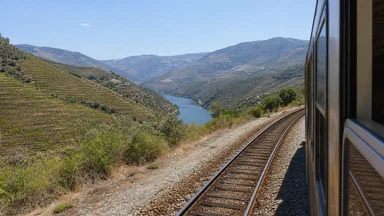
Portugal's railways are a study in contrasts: sleek tilting trains that hug the coast, regional lines that meander through cork forests, and buses that replace trains on Sundays without warning. I spent three days riding the network, notebook in hand, and found that the gap between travel-blog advice and on-the-ground reality is often measured in kilometres — or hours. This is a mistake-avoidance walkthrough for anyone who prefers steel wheels to rental cars.
Why the Lisbon–Porto Train Is Not the Fastest Thing on the Line
The Alfa Pendular is Portugal's flagship train, a tilting electric unit that can theoretically reach 220 km/h but rarely exceeds 190 km/h in practice. The Lisbon–Porto journey, advertised at 2 hours 45 minutes, often stretches closer to 3 hours on a busy day with platform holds. The tracks were built in the 19th century, and curves near Coimbra force the train to slow down. On a typical weekday, the Alfa makes three intermediate stops — Coimbra-B, Aveiro, and sometimes Vila Nova de Gaia — each adding a couple of minutes for boarding. If you are travelling between Porto and Lisbon solely for speed, the Alfa is your best bet, but the Intercidades (IC) offers a viable alternative at roughly half the cost and only 30–45 minutes longer.
Booking ahead is essential. Weekday departures before noon fill up by mid-morning, especially on Fridays and Mondays. A first-class ticket bought on the day can cost around €45–55, while an advance online fare for the same seat might be €25–30. The Intercidades (IC) trains take about 3 hours 30 minutes and cost roughly half the Alfa fare. They stop at more stations — Santarém, Coimbra-B, Aveiro — but the seats are comfortable and the café car serves a decent coffee. Some travellers prefer the IC for the extra legroom and lower price, but the Alfa's tilting mechanism makes it noticeably smoother through the northern hills. The trade-off is frequency: the Alfa runs roughly every hour, while the IC is less frequent after 18:00. If you miss the last Alfa at around 21:00, the next IC might be a bus replacement from Coimbra — a scenario I encountered and do not recommend.
For those willing to trade time for savings, an alternative is to take a regional train from Lisbon to Coimbra (around 2 hours, costing roughly €15–20) and then switch to an Alfa or IC from Coimbra to Porto. This split journey can save you around €10–15 compared to a direct Alfa ticket, but you lose about an hour in total travel time and need to manage the transfer at Coimbra-B, which is a large station with clear signage. The regional trains are older, with less comfortable seating and no air conditioning in some carriages, so this option is best suited for budget-conscious travellers who are not in a hurry.
Another consideration is the first-class vs. second-class debate on the Alfa. First-class seats are wider, have more legroom, and include a complimentary snack and drink. However, the difference in comfort is not enormous, and second-class seats are still perfectly fine for the 3-hour journey. The price difference is typically around €10–15. If you are travelling during peak hours, first-class is quieter and less crowded, which can make a difference on a Friday afternoon.
The Bus That Stops 3 km Before the Station: Óbidos to Caldas da Rainha
Óbidos is a medieval walled village that draws day-trippers from Lisbon. The most common way to reach it by public transport is a Rede Expressos coach from Campo Grande, which takes about 1 hour 15 minutes. But the coach does not stop at the castle gate. It pulls into a roundabout on the main road, roughly 3 km downhill from the historic centre. No taxi waits there. No sign points the way.
The walk is a steady uphill on a narrow road with no pavement for the first 500 metres. In July heat, it is a 25-minute slog. A local bus, the 787, runs from the roundabout to the town square roughly every hour, but the schedule is not posted at the stop. I waited 40 minutes for a bus that never came, then walked. A fellow traveller later told me the bus sometimes runs only on school days, which I could not verify, but the uncertainty is enough to make the walk the more reliable option.
An alternative is to take a train to Caldas da Rainha, a 20-minute ride from Óbidos, and then catch a local bus or taxi back. The Caldas station has a ticket machine and a café. A taxi from Caldas to Óbidos costs around €8–12. The detour adds about 45 minutes but spares you the uphill hike. The trade-off is that the train from Lisbon to Caldas takes about 2 hours, versus 1h15 by coach, so you lose time on the front end. However, the train journey itself is pleasant, passing through agricultural plains and small towns, and Caldas da Rainha has a lively market on Saturdays if you time your visit.
If you arrive by coach, plan for the walk or the wait. Pack water and comfortable shoes. The castle is worth the effort, but the approach is a lesson in Portugal's transport gaps. For a more seamless experience, consider staying overnight in Óbidos — there are several guesthouses inside the walls — so you can explore the village in the evening when the day-trippers have left. The coach back to Lisbon departs from the same roundabout, so factor that into your return plans.
Regional Trains That Vanish on Sundays: The Beira Baixa Line
The Beira Baixa line runs from Entroncamento to Guarda, cutting through the interior east of Coimbra. It is a single-track, diesel-operated route with stations that look like they were last painted in the 1970s. On weekdays, there are six or seven departures in each direction, spaced roughly every two hours. On Sundays, that drops to three — and the gaps can be punishing.
I attempted the Covilhã to Guarda stretch on a Sunday. The first train left at 08:15, the next at 12:40, and the last at 17:05. Miss the 08:15 and you wait four hours. The station at Covilhã has a small waiting room but no café. The ticket machine accepts only coins or a Via Verde card. I watched a German couple struggle with the machine because their credit card was declined. They eventually found a nearby café that exchanged coins, but it added 20 minutes to their wait.
The CP app does not show the full PDF timetable for the Beira Baixa line; you have to download the PDF from the CP website. The app tends to list only the next few departures, which can be misleading if you are planning a same-day connection. I recommend checking the PDF before you leave, and having a bus backup. Rede Expressos runs a coach from Covilhã to Guarda that takes about 1 hour 30 minutes and costs roughly €10–12. It runs twice on Sunday, at 10:00 and 16:00. The coach is air-conditioned and more comfortable than the regional train, but it does not offer the same views of the Serra da Estrela mountains.
The interior routes are beautiful — the landscape opens into granite hills and olive groves — but they demand patience. As one station master told me, "We are not a high-speed country here. We are a slow country. You have to accept that." This is especially true on the Beira Baixa line, where delays of 10–15 minutes are common due to single-track sections. If you are connecting to another train at Entroncamento, leave at least 30 minutes of buffer time. The station at Entroncamento has a café and a waiting room, but the platform information boards are sometimes out of sync with the actual arrivals.
For travellers heading to the Serra da Estrela natural park, the train to Guarda is the most scenic option, but the bus from Covilhã to the park's main entrance at Torre is more practical. The bus runs daily in summer, roughly every two hours, and costs around €5–8. Combining train and bus can be a good strategy: take the train to Covilhã, then a bus to the park, and return via the same route. Just be mindful of the Sunday schedule on the train side.
How the Algarve Line Fools Sun-Seekers Every Summer
The Algarve line runs from Lagos to Vila Real de Santo António, hugging the coast for about 140 km. In theory, the journey takes around 3 hours 15 minutes. In practice, summer heat can cancel afternoon trains without warning. The tracks are not electrified west of Faro, and the diesel units overheat when the mercury climbs above 35°C. I experienced a cancellation in July near Tavira. The station had no shade and one vending machine that sold warm water.
The replacement bus took 2 hours to arrive. The bus driver told me this happens "at least once a week" in July and August. The bus did not stop at all stations; passengers at Cacela had to walk to the main road. The train eventually resumed, but the delay cost me my connection to a ferry from Vila Real de Santo António to Ayamonte in Spain. The ferry runs roughly every hour until 21:00, but missing it meant a 2-hour wait for the next one.
The Faro–Lagos stretch is particularly unreliable in summer. Buses run more frequently and are air-conditioned. The Algarve's bus network, operated by Vamus and Rede Expressos, offers roughly hourly departures between the main towns. The fare is comparable — around €8–12 for a one-way trip. The bus takes about 20 minutes longer than the train on a good day, but it is less likely to be cancelled. A counter-argument is that the train offers better views of the coastline, especially between Faro and Olhão, where the line crosses the Ria Formosa lagoon. If you are a photographer or a nature lover, the train is worth the risk, but plan for delays and carry water and snacks.
Another option is to break the journey into segments. For example, take the train from Lagos to Faro (around 1 hour 30 minutes), explore Faro, and then continue by bus to Tavira or Vila Real. This allows you to enjoy the scenic train ride for the first half and switch to a more reliable bus for the second half. The bus station in Faro is a 10-minute walk from the train station, and there are several cafés nearby where you can wait.
If you are travelling with luggage, note that the Algarve trains have limited luggage space, especially on busy summer days. The overhead racks are small, and there is no dedicated luggage area. Buses, on the other hand, have underfloor storage. For families or backpackers, the bus might be the more practical choice even without the heat issue.
The Douro Valley Train: Scenic but Scheming with Timetables
The Douro Valley line is one of Europe's great scenic railways, winding along the river from Porto to Pocinho. The section from Pinhão to Pocinho is the most dramatic, with terraced vineyards dropping to the water. But the timetable is designed more for local commuters than tourists. From Pinhão, there are only four trains daily toward Pocinho, with the last departure around 16:00. Miss it, and you are stuck until the next morning.
The historic steam train, the "Comboio Histórico do Douro," runs only on weekends from June to October and requires booking weeks in advance. Tickets cost around €50–60 and sell out fast. The steam train is a tourist experience — open carriages, live music, a glass of port — but it is not a practical means of transport. If you want to reach Pocinho, take the regular regional train. The regional train from Porto to Pocinho takes about 3 hours 30 minutes and costs around €15–20. It stops at all stations, including small hamlets like Ferradosa and Vesúvio, where you can see the traditional rabelo boats on the river.
Returning from Régua after 18:00 is a problem. The last train to Porto leaves around 19:30, but if you miss it, a Rede Expressos bus runs from Régua to Porto roughly every two hours until 22:00. The bus takes about 2 hours, compared to 1h45 by train. The bus stop is a 10-minute walk from the train station. There is no ticket machine at the bus stop; buy your ticket on the Rede Expressos app or at the station café. The café closes at 20:00, so if your bus is later, you need the app.
Small stations along the Douro line — like Ferrão or Mosteirô — have no ticket machines. Carry cash. The conductor on the train can sell you a ticket, but they only accept cash for on-board purchases. A fellow passenger tried to pay with a card and was told, "Só dinheiro." This is a common issue on regional lines, so always have enough cash for your ticket and any snacks you might buy on board.
For those staying in Porto and wanting a day trip to the Douro Valley, the best strategy is to take an early train to Pinhão (departing Porto around 07:30), explore the town and its famous train station with azulejo tiles, then catch the 13:00 train to Pocinho, and return from Pocinho at around 15:30. This gives you about 2 hours in Pocinho, which is enough for a walk along the river and a visit to the local museum. Alternatively, you can stop at Régua on the way back and visit the Douro Museum, which is open until 18:00. The museum has a good café with views of the river.
The Lisbon–Sintra Line: Tourist Magnet with a Crowding Problem
The Lisbon–Sintra line is one of the most popular day trips from the capital, and for good reason: the Pena Palace, the Moorish Castle, and the historic centre are all accessible by train from Rossio station. The journey takes about 40 minutes and costs around €2.50 one way. However, the trains are notoriously crowded, especially on weekends and during peak tourist season. On a Saturday in August, I found myself standing in a packed carriage with no air conditioning, the windows open to let in the summer heat. The train was delayed by 15 minutes due to a signal failure near Amadora.
The line is electrified and runs every 15–20 minutes, but the frequency drops after 20:00. The last train from Sintra to Lisbon departs around 01:00, so late-night returns are possible, but the trains after 22:00 are less frequent, running every 30 minutes. The station at Sintra has ticket machines that accept cards and cash, but the queues can be long in the afternoon. Buy a return ticket at Rossio to avoid the queue at Sintra.
An alternative is to take the bus from Lisbon to Sintra. The bus 403 from Campo Grande takes about 50 minutes and costs around €4–5. It is less frequent than the train (every 30 minutes) but often less crowded, and it drops you closer to the historic centre. The bus stop at Sintra is a 5-minute walk from the train station. For a more scenic approach, consider the tram from Lisbon to Belém (tram 15) and then a bus to Sintra, but that adds an hour to the journey.
Once in Sintra, the local buses to the palaces (434 and 435) are also crowded. The walk from the town centre to Pena Palace is steep but manageable, taking about 30 minutes. If you are fit, walking avoids the bus queues and offers views of the countryside. The palace itself requires advance booking for entry, with time slots every 30 minutes. Without a booking, you might wait up to 2 hours. Plan your visit on a weekday if possible, and arrive early — before 10:00 — to avoid the worst crowds.
Three Rules for Riding Portugal's Rails Without Rage
First, always have a bus backup. Rede Expressos and FlixBus cover most routes that CP serves, often with more frequent departures and air conditioning. The bus network is especially useful for the Algarve and the interior. Check both options before you travel. For instance, on the Lisbon–Porto corridor, FlixBus offers fares as low as €10–15 if booked in advance, compared to €25–30 for the Alfa Pendular. The bus takes about 3 hours 30 minutes, similar to the IC train, but with less legroom. However, the bus has free Wi-Fi and power outlets, which the regional trains often lack.
Second, download the CP app — but verify times at the station board. The app sometimes shows only the next two or three departures, omitting later trains. The PDF timetables on the CP website are more reliable, especially for regional lines like the Beira Baixa. Print one or save it offline. Also, note that the app's real-time tracking is not always accurate; I have seen trains listed as "on time" that were actually 10 minutes late. The station boards are updated more frequently.
Third, buy a Via Verde card. It is a prepaid card sold at major stations and some convenience stores that works in all CP ticket machines. It saves the hassle of cash or foreign-card rejection. The card itself costs €0.50, and you load it with credit. It also works on some toll roads, but that is a bonus. Alternatively, you can use the CP app to buy tickets, but the app requires a Portuguese mobile number for account registration, which can be a barrier for tourists. The Via Verde card is simpler: just tap and go.
Portugal's rail network is not broken — it is just particular. The trains run, the scenery is stunning, and the staff are generally helpful. But the network demands that you plan for gaps, carry cash, and accept that sometimes a bus will stop 3 km before the station. The reward is a journey that feels authentic, even when it is inconvenient. Whether you are watching the sunset from a Douro Valley train or navigating the Sunday schedule on the Beira Baixa line, the key is to embrace the unpredictability and enjoy the ride.