A Shared fMRI Machine Forced Two Labs Into Opposite Memory Models

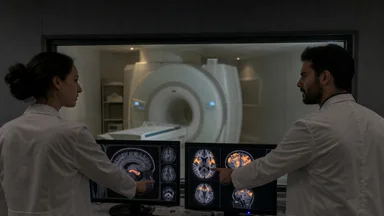
In the basement of a mid-tier university's psychology building, a single 3T fMRI scanner hums 24 hours a day. It is the only functional neuroimaging machine on campus, and for the past six years, it has been shared by two labs whose theories of memory could hardly be more different. The arrangement, born of budget constraints, has produced a rare kind of scientific friction: a forced collaboration that neither lab wanted but both eventually needed.
One Scanner, Two Rival Theories of Memory
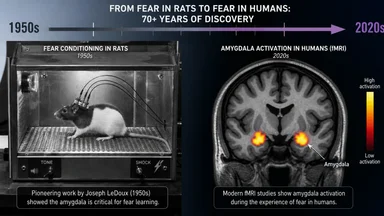
Lab A, led by a cognitive neuroscientist with a background in rodent electrophysiology, studies hippocampal place cells. The lab's central hypothesis is that the hippocampus stores sparse, indexed representations of events—what they call 'engrams'—that are reactivated during recall. Their experiments typically involve spatial navigation tasks in virtual environments, with subjects asked to remember the locations of objects or rooms. For instance, in one typical study, participants navigated a virtual city and later had to recall where specific buildings were located; hippocampal activity during encoding and retrieval showed high pattern similarity, which the lab interpreted as evidence for an indexing system.
Lab B, just down the hall, is run by a researcher trained in computational neuroscience. This group focuses on cortical pattern separation: the idea that memories are stored as distributed traces across the neocortex, with overlapping features encoded by slightly different neural ensembles. Their tasks often involve discriminating between highly similar images or sounds, with no spatial component at all. A representative experiment required participants to distinguish between dozens of similar-looking faces, where the perirhinal cortex showed graded activity based on similarity, while the hippocampus remained relatively silent.
Both labs received their scanner time through a lottery system administered by the university's imaging center. Each got roughly 12 hours per week, typically in disjointed slots: Lab A on Monday and Wednesday mornings, Lab B on Tuesday and Thursday afternoons. The arrangement meant that neither group could run long, continuous studies, and sample sizes were capped at around 15 to 20 subjects per experiment. This limitation meant that each experiment had to be carefully designed to maximize statistical power, often at the expense of exploratory analyses. The scarcity of scanner time also meant that pilot studies were rare; most experiments jumped straight to data collection based on prior results from other labs or computational models.
The proximity forced an uncomfortable awareness of the other's work. Postdocs from the two labs would pass each other in the hallway, carrying data from the same machine but analyzing it with completely different preprocessing pipelines. Tensions simmered, especially when both groups started submitting to the same high-impact journals. The competition was palpable: each lab would check the other's recent preprints and adjust their own experiments accordingly, sometimes leading to a race to publish first.
The Hippocampal Index vs. Distributed Traces
Lab A's flagship finding, published in 2023, showed that when subjects navigated a virtual maze, hippocampal activity patterns during recall precisely matched those during encoding—consistent with an indexing mechanism. The paper argued that the hippocampus acts as a 'pointer' to neocortical storage sites, much like a library catalog. The study used representational similarity analysis (RSA) to compare patterns across encoding and retrieval, and found that the similarity was significantly higher in the hippocampus than in any neocortical region, supporting the idea of a dedicated indexing system.
Lab B responded with a study in which participants viewed hundreds of similar faces. The results indicated that activity in the perirhinal cortex and other neocortical regions shifted systematically as stimuli became more alike, with no corresponding change in hippocampal signals. They interpreted this as evidence for distributed, overlapping representations that do not require a central index. The study employed a parametric design where face similarity was varied continuously, and the neural activity in the perirhinal cortex tracked this similarity gradient, while hippocampal activity remained flat across conditions.
The two labs attempted to replicate each other's tasks. Lab A ran Lab B's face-discrimination experiment and found weak hippocampal involvement, but argued that the task lacked the spatial context necessary to engage the indexing system. They pointed out that the face task was purely visual and did not require participants to remember locations, which they believed was a key trigger for hippocampal engagement. Lab B ran Lab A's maze task and observed neocortical pattern separation effects, which they claimed undermined the need for a hippocampal index. In their replication, they found that the perirhinal cortex and even early visual cortex showed pattern separation effects in the maze task, suggesting that distributed representations were at play even in spatial memory.
Both sets of results appeared in peer-reviewed journals—Lab A's in Nature Neuroscience, Lab B's in Neuron. Reviewers at each journal praised the rigor of the work while noting the unresolved tension with the competing model. Neither lab could afford to run the large, multi-site studies that might settle the dispute. The cost of a single fMRI scan—around US$ 500 to 1,000 per hour—meant that a typical study with 20 subjects cost tens of thousands of dollars, and multi-site studies would require additional funding for data coordination and travel.
How Infrastructure Shapes Scientific Debates
The shared scanner constrained not only sample sizes but also the kinds of questions each lab could ask. With only 12 hours per week, neither group could afford pilot experiments or extensive parameter sweeps. Every scan had to count, which pushed both labs toward confirmatory rather than exploratory designs. This confirmatory bias may have contributed to the entrenchment of both theories, as each lab focused on experiments that were likely to support their own model rather than testing the boundaries of their theory.
Funding agencies, meanwhile, were reluctant to support the kind of adversarial collaboration that might resolve the dispute. Grant reviewers often asked for larger sample sizes or multi-site data, but the infrastructure to collect such data simply did not exist. One grant reviewer's demand for a sample size of 100 subjects per condition—which two labs could not match—became a running joke in the department, as described in a related article on this site. The disconnect between what reviewers expected and what was feasible with shared infrastructure highlighted a broader problem in neuroimaging: the field's standards for sample size have increased, but the resources to meet those standards have not kept pace.
The scanner also had downtime—roughly 10 percent of scheduled hours, by the lab managers' estimates—due to hardware issues and software upgrades. When the machine was down, both labs lost time, and the backlog meant that experiments were delayed by weeks or months. Graduate students learned to design studies that could be paused and resumed, which favored simple, well-rehearsed paradigms over innovative ones. For example, one graduate student from Lab A had to abandon a complex virtual reality navigation task because it required continuous scanning sessions that could not be interrupted; she switched to a simpler object-location memory task that could be split across multiple days.
Equipment costs also limited the adoption of complementary methods. Neither lab could afford a dedicated MEG system or high-density EEG, which might have provided the temporal resolution needed to distinguish between the two models. Functional near-infrared spectroscopy (fNIRS) was available but considered too low-resolution for the fine-grained spatial questions at stake. The lack of temporal resolution was particularly problematic for Lab B, whose pattern separation theory predicted rapid neural dynamics that fMRI could not capture. They attempted to use EEG with a 64-channel system borrowed from another department, but the setup was cumbersome and the data quality inconsistent.
Trade-offs also emerged in the choice of analysis methods. Lab A favored multivariate pattern analysis (MVPA) to decode hippocampal representations, while Lab B used univariate contrasts to identify neocortical regions showing similarity gradients. Each method had its strengths: MVPA could detect subtle patterns but required more data, while univariate analysis was more robust with small sample sizes. The two labs debated these methodological choices in conference calls and email exchanges, with each side accusing the other of using methods that favored their own theory. This methodological disagreement further delayed any potential reconciliation.
Preprint Wars and Peer-Review Stalemates
Between 2023 and early 2025, the two labs traded preprints on bioRxiv at a rapid clip. Lab A would post a new analysis showing that hippocampal activity during recall was necessary for accurate performance; Lab B would respond with a preprint demonstrating that neocortical activity alone could predict memory performance in certain tasks. The pace was such that other researchers in the field began to follow the saga with interest, and some even placed bets on which lab would prevail.
Direct replications became a battleground. When Lab A attempted to reproduce one of Lab B's key findings—a pattern separation effect in the anterior temporal lobe—they obtained a null result. Lab B argued that the replication failed because Lab A had used a different stimulus set and a slightly different timing protocol. Lab A countered that the original effect was fragile and perhaps specific to one set of stimuli. This exchange mirrored a broader replication crisis in psychology and neuroscience, where small changes in methodology can lead to different outcomes. The two labs eventually agreed to a pre-registered replication attempt, but even then, disagreements over the exact parameters delayed the project for months.
Reviewers at journals were caught in the middle. Several manuscripts went through multiple rounds of revision, with one reviewer asking for a joint experiment that would directly compare the two models. But such an experiment would require both labs to agree on a single protocol, a task that proved surprisingly difficult. Each group had invested years in its own paradigm and was reluctant to cede control. The PIs had strong personalities and deeply held beliefs about the nature of memory; one was known for his passionate defense of hippocampal indexing at conferences, while the other was equally adamant about the primacy of cortical representations. Their disagreements sometimes spilled into public forums, including Twitter threads and blog posts, where they debated the implications of each other's findings.
Grant renewals added pressure. Both labs had major funding from the same agency, and program officers made it clear that continued support would depend on progress toward resolving the theoretical disagreement. One officer reportedly told the PIs, 'You can't both be right, and we can't fund both of you forever.' This ultimatum forced the labs to consider collaboration more seriously than before. The threat of losing funding was a powerful motivator, but it also created resentment: both PIs felt that their research was being dictated by administrative fiat rather than scientific curiosity.
A Bayesian Truce Emerges from Shared Data
The turning point came in late 2024, when the funding agency mandated that the two labs submit a joint analysis plan as a condition for the next grant cycle. Reluctantly, the PIs agreed to share all of their raw data—more than 200 subjects' worth of fMRI scans, behavioral logs, and demographic information. This was a significant concession, as both labs had previously guarded their data closely, fearing that the other might use it to undermine their theory.
A postdoc from Lab A and a graduate student from Lab B spent six months building a hierarchical Bayesian model that could accommodate both datasets. The model allowed for context-dependent effects: it could estimate whether hippocampal indexing was more prominent in spatial tasks and neocortical pattern separation in non-spatial ones. The model also included parameters for task difficulty, stimulus similarity, and individual differences, which had been ignored in previous analyses. The joint analysis required the two researchers to reconcile their preprocessing pipelines, which had used different smoothing kernels, motion correction algorithms, and normalization templates. They eventually settled on a common pipeline that combined elements from both labs, a compromise that satisfied neither but was acceptable to both.
The results, published in Nature Neuroscience in mid-2025, showed that both models were partially correct. In spatial navigation tasks, hippocampal engrams dominated, consistent with Lab A's theory. In non-spatial discrimination tasks, neocortical pattern separation was the primary mechanism, as Lab B had argued. But the model also revealed a middle ground: in tasks that combined spatial and non-spatial features, both systems contributed, with their relative weights shifting depending on the similarity of the stimuli. For example, in a task where participants had to remember both the location and identity of an object, the hippocampus was more active when locations were similar, while the perirhinal cortex was more active when objects were similar. This nuanced result suggested that the brain uses a flexible combination of indexing and distributed representations, depending on the demands of the task.
The paper listed both PIs as co-senior authors, an arrangement that had seemed impossible just two years earlier. In the discussion, they acknowledged that the shared infrastructure had forced a confrontation that might otherwise have been avoided, and that the field benefited from the adversarial collaboration. They also noted that the joint analysis would not have been possible without the data-sharing mandate, and they called for more such mandates in the future.
Counter-arguments to the Bayesian synthesis quickly emerged. Some critics argued that the model was overfitted to the specific tasks used by the two labs and might not generalize to other memory paradigms. Others pointed out that the Bayesian approach, while powerful, required strong priors that could bias the results. A group at a rival university published a reanalysis of the joint dataset using a different modeling approach, which suggested that the hippocampus was more involved in non-spatial tasks than the original paper claimed. This sparked a new round of debate, but this time the discussion was more constructive, with both sides acknowledging the limitations of their methods.
Lessons for the Age of Expensive Neuroimaging
The story of these two labs offers lessons for a field increasingly concerned with replication and reproducibility. Shared infrastructure, while frustrating, can foster productive rivalry. When labs must coordinate on a single machine, they are forced to confront each other's methods and assumptions in ways that isolated labs might not. The constant comparison of results and methods can lead to a deeper understanding of the phenomena under study, even if it also creates tension.
Data-sharing mandates, like the one that prompted the joint analysis, can reduce publication bias. The combined dataset included many null results that neither lab would have published on its own, and those nulls were essential for the Bayesian model to estimate effect sizes accurately. Without them, the truce might never have emerged. The joint dataset also allowed for the first time a comprehensive analysis of individual differences, revealing that some subjects relied more on hippocampal indexing while others relied more on cortical pattern separation—a finding that had been obscured in single-lab studies.
Still, the small-n paradigm that dominates neuroimaging remains a concern. Most published fMRI studies still rely on 15 to 30 subjects, a sample size that can detect only large effects. The field has been slow to adopt the kind of multi-site consortia that have transformed genetics and epidemiology, partly because scanner time is expensive and partly because institutional incentives favor single-PI grants. The two labs in this story were able to pool their data only because of the funding agency's mandate; without such external pressure, data sharing remains rare.
Alternative methods like MEG and fNIRS remain underfunded. A recent analysis by the National Science Foundation found that only about 8 percent of cognitive neuroscience grants in 2024 proposed using any method other than fMRI. This narrow focus may limit the kinds of questions researchers can ask, especially about the temporal dynamics of memory. For instance, Lab B's theory predicts that pattern separation occurs within hundreds of milliseconds, a timescale that fMRI cannot resolve. MEG studies have since provided some evidence for rapid neocortical pattern separation, but these studies are still rare and underfunded.
Trade-offs also exist in the choice of analysis methods. MVPA, favored by Lab A, is sensitive to distributed patterns but requires more data and is computationally intensive. Univariate analysis, favored by Lab B, is simpler and more robust with small samples but may miss subtle patterns. The field has not yet settled on a standard approach, and the choice of method can influence the conclusions drawn from the same data. The joint analysis in this story used both approaches and found that they converged on similar conclusions, but this is not always the case.
What the Field Gains from Forced Collaboration
The shared-scanner experiment suggests that funding agencies should consider incentivizing adversarial collaborations more explicitly. When two labs with opposing theories are required to work together, the resulting science is often stronger than either could produce alone. The key is to design incentives that reward the collaboration itself, not just the winning model. In this case, the funding agency's mandate was initially resented, but it ultimately led to a more comprehensive understanding of memory. Similar initiatives, such as the adversarial collaboration program in social psychology, have shown that structured debates can reduce bias and improve theory development.
Graduate students in both labs reported that the joint analysis was the most educational experience of their training. They learned to code in each other's analysis pipelines, to argue constructively about preprocessing choices, and to appreciate the assumptions behind each model. Several have gone on to postdoctoral positions that combine both approaches, suggesting that the next generation of memory researchers may be less tribal. One former graduate student from Lab A now runs a lab that uses both hippocampal and cortical measures in the same study, aiming to bridge the gap between the two theories.
Replication efforts, too, could benefit from dedicated scanner time. Currently, most replication studies rely on the same infrastructure that produced the original results, which can perpetuate hidden biases. A shared, neutral facility—perhaps funded by a consortium of journals—could provide a venue for independent replications of contested findings. Such a facility would need to be staffed by researchers who are not invested in any particular theory, to ensure impartiality. The cost of such a facility would be substantial, but it could be offset by charging user fees or by pooling resources from multiple institutions.
Whether memory research will converge on a hybrid theory remains an open question. The Bayesian model from the joint analysis is just one possible synthesis, and other labs have already proposed alternatives. For example, a group at the University of California has suggested that the hippocampus and neocortex form a complementary learning system, where the hippocampus rapidly encodes new information and the neocortex slowly integrates it into existing knowledge. This model shares some features with both Lab A's and Lab B's theories, but it also makes unique predictions about the time course of memory consolidation. Testing these predictions will require new experiments that go beyond the paradigms used by the two labs.
In the end, the forced collaboration between these two groups has shown that even the most entrenched disagreements can be productive when the right conditions are in place. Sometimes, all it takes is a single scanner, a tight budget, and a funding agency that refuses to take sides. The story also underscores the importance of infrastructure in shaping scientific debates: the shared scanner was both a constraint and an opportunity, forcing the labs to confront each other's work in a way that might not have happened if they had their own machines. As neuroimaging becomes more expensive and centralized, such forced collaborations may become more common, and the field will need to learn how to make the most of them.