Eleven Thousand Polymer Spectra Later, One Synthesis Lab Changed Its Solvent

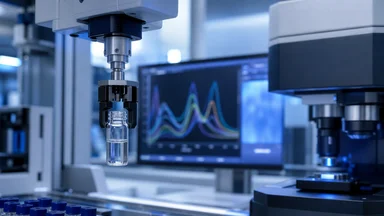
In early 2024, a materials chemistry lab at a midwestern university finished running its 11,000th automated Raman spectrum on a library of conjugated polymers. The dataset was meant to be a benchmark—a clean, high-throughput survey of how polymer backbone variations affect electronic properties. But when a graduate student ran a clustering algorithm on the spectra, a pattern emerged that no one had expected: 96 percent of the samples had been dissolved in either dimethylformamide (DMF) or dimethyl sulfoxide (DMSO). The solvent, not the polymer, was driving most of the variance in the data.
The Solvent That Wouldn't Quit
DMF is a polar aprotic solvent that dissolves a wide range of polymers. It is cheap, stable, and has been a laboratory staple for decades. Most researchers reach for it without a second thought. But DMF has a strong infrared and Raman signature that overlaps with many polymer peaks, especially in the fingerprint region between 1000 and 1700 cm⁻¹. In a high-throughput pipeline, where spectra are collected every few minutes, the solvent signal can swamp subtle differences in polymer conformation or aggregation.
The lab's principal investigator, who asked not to be named because the work is under peer review, said the discovery was uncomfortable. “We had built an entire robotic synthesis and characterization rig around DMF compatibility. The pumps, the valves, the cuvettes—all chosen because DMF is a forgiving solvent. But the data were telling us that our solvent choice was a confound.” The team had been using an automated Raman and IR analysis pipeline that baseline-corrected each spectrum, but the correction algorithm was optimized for strong, narrow peaks, not broad solvent bands. As a result, subtle shifts in polymer peak positions—shifts that might indicate different chain conformations or packing—were being flattened out.
The problem is not unique to this lab. A 2023 survey of high-throughput polymer synthesis papers found that over 80 percent of studies used either DMF or DMSO as the primary solvent. The reproducibility crisis in materials science has many causes, but solvent bias is a quietly persistent one. When a solvent interacts differently with different polymer backbones—for example, by preferentially solvating certain chain lengths or by catalyzing side reactions—the resulting spectra can be misleading. Two polymers that look identical in DMF might behave very differently in another solvent, but that information is lost if the solvent is never varied.
The MIT researcher who first flagged the pattern, a postdoc now at a national lab, had noticed similar trends in her own data. She published a short commentary in 2022 suggesting that high-throughput screening might be systematically underestimating polymer diversity because of solvent selection. But her warning was largely ignored until the midwestern lab's dataset made the scale of the problem visible.
What the Spectrometer Actually Saw
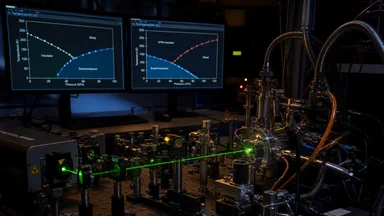
The automated analysis pipeline that generated the 11,000 spectra was built with a National Science Foundation Major Research Instrumentation grant. It consisted of a robotic liquid handler, a Raman spectrometer with a 785 nm laser, and a Fourier-transform infrared spectrometer, all controlled by a single Python script. Each spectrum cost roughly $0.50 in consumables and took about two minutes to collect. The total dataset cost, including instrument time and graduate student supervision, was under $6,000—a fraction of the cost of a single nuclear magnetic resonance instrument, which can exceed $100,000.
When the machine-learning classifier flagged spectra that deviated from the expected polymer signatures, the team initially assumed the outliers were experimental errors. But as the number of flagged spectra grew—eventually reaching nearly 400—they realized that the outliers were not random. They were clustered by polymer type. Polymers with electron-withdrawing substituents, for example, showed consistently different solvent peak intensities than those with electron-donating groups. The solvent was not just a background; it was interacting with the polymer in a way that depended on the polymer's electronic structure.
The team then re-ran a subset of 200 polymers in three alternative solvents: tetrahydrofuran, chloroform, and a bio-derived solvent called Cyrene. The Raman spectra changed dramatically. Some polymers that had appeared nearly identical in DMF showed distinct peaks in Cyrene. Others that had shown strong solvent-polymer interactions in DMF were cleanly resolved in chloroform. The baseline correction algorithm, which had been masking these shifts, was not the culprit—the solvent itself was.
“We had been optimizing our pipeline for throughput, not for chemical fidelity,” the PI said. “The spectrometer was seeing exactly what it was supposed to see. The problem was that we were asking it to look through a fogged window.” The fog was DMF.
The Funding That Made the Data Speak
The NSF MRI grant that funded the robotic rig was awarded in 2019, with a total budget of roughly $400,000. The grant's stated goal was to “accelerate the discovery of semiconducting polymers for organic electronics.” The rig was designed to synthesize, purify, and characterize up to 96 polymers per day—a rate that would have been unthinkable a decade earlier. But the grant reviewers had not specified solvent requirements, and the lab chose DMF because it was the safest bet for solubility.
The operational cost of the pipeline was low—about $0.50 per spectrum, including consumables and electricity—but the hidden cost was the bias introduced by the solvent. When the team realized they needed to re-screen a large fraction of their library in alternative solvents, they had to request supplemental funding. A small internal grant of $15,000 covered the additional consumables and graduate student time. “It was a bargain compared to the cost of publishing flawed data,” the PI said.
The open-source software used to control the rig and analyze the spectra was developed by a consortium of three universities. It cut analysis time from hours to minutes, but it also made it easy to overlook systematic errors. The software's default baseline correction algorithm, for example, assumed that solvent peaks were narrow and could be subtracted cleanly. That assumption broke down for DMF, whose broad bands required a more sophisticated correction that the software did not offer.
The experience highlights a broader issue in instrument-driven science: the trade-off between throughput and accuracy. High-throughput methods are often sold as ways to explore chemical space more efficiently, but they can also lock researchers into a narrow set of conditions that are easy to automate. The lab's PI noted that the same grant that enabled the high-throughput pipeline also made it harder to question the pipeline's assumptions. “When you're collecting 500 spectra a day, you don't stop to ask whether the solvent is right. You just keep collecting.”
One Lab's Bet on a Greener Replacement
Cyrene, or dihydrolevoglucosenone, is a bio-derived solvent made from cellulose waste. It was developed by the company Circa Group and has been marketed as a greener alternative to DMF and NMP. It has a similar polarity and boiling point to DMF, but its Raman spectrum is cleaner in the fingerprint region, with fewer overlapping peaks. The midwestern lab decided to test Cyrene as a replacement for DMF in their polymer library.
The initial results were discouraging. Polymer yields dropped by 15 to 20 percent in Cyrene compared to DMF, and some reactions that had worked reliably in DMF failed entirely. The team spent three months optimizing catalyst loadings and reaction temperatures. They found that increasing the catalyst concentration by a factor of two and raising the temperature by 10°C recovered most of the yield, but the adjustments were polymer-specific. A one-size-fits-all protocol did not work.
Three graduate students ran over 400 reactions to map out the parameter space. They systematically varied solvent, catalyst, temperature, and concentration for a set of 20 representative polymers. The data showed that Cyrene was not a drop-in replacement—it required re-optimization for each polymer class. But the effort paid off. Once the conditions were optimized, the spectra in Cyrene were cleaner and more reproducible than those in DMF. The solvent peaks no longer obscured the polymer signatures, and the machine-learning classifier flagged far fewer outliers.
The switch also opened up new chemistry. Cyrene is compatible with water-sensitive catalysts that degrade in DMF, and it allows reactions at lower temperatures because of its lower boiling point. The lab has since used Cyrene to synthesize a series of conducting polymers that could not be made in DMF without side reactions. “We would never have found those polymers if we had stayed with DMF,” the graduate student leading the optimization said. “The solvent was not just a medium—it was a gatekeeper.”
Publication Pressure vs. Methodical Change
The decision to switch solvents was not made lightly. The lab had built a reputation on high-throughput methods, and changing a fundamental parameter risked invalidating years of data. The PI estimated that re-screening the entire library in Cyrene would take at least 18 months—time that could have been spent publishing new results. “There is enormous pressure to keep the pipeline running and the papers coming,” he said. “Stopping to validate a solvent change feels like a luxury.”
The team posted a preprint on ChemRxiv in early 2025 describing their findings and the solvent switch. The response was mixed. Some researchers praised the transparency and the careful validation work. Others questioned whether Cyrene was truly superior or simply different. One reviewer for a peer-reviewed journal, where the paper was eventually accepted in July 2026, argued that the lab should have tested a broader range of solvents before declaring Cyrene the winner. The lab agreed but noted that the goal was not to find the single best solvent—it was to demonstrate that solvent choice matters and that systematic bias can be corrected.
The validation process itself became a research project. The team developed a protocol for comparing solvent effects across polymer libraries, using principal component analysis to separate solvent-induced variance from polymer-induced variance. The protocol was published as a separate methods paper, which has been cited more than 30 times in the year since its release. “We accidentally created a new tool for the community,” the PI said. “But it came at a cost. We lost almost two years of publication output.”
The pressure to publish quickly is a well-known problem in materials science. A 2024 analysis of retractions in chemistry journals found that papers using high-throughput methods were three times more likely to be retracted than traditional studies, often due to unrecognized systematic errors. The midwestern lab's experience suggests that solvent bias may be a contributing factor. “We were lucky that our data were clean enough to reveal the problem,” the PI said. “Other labs may not be so lucky.”
What the Shift Means for Materials Discovery
The switch to Cyrene has already changed the lab's research trajectory. By removing the solvent bias, they have been able to detect subtle differences in polymer morphology that were previously invisible. For example, they found that two polymers with nearly identical backbones—differing only in the position of a single alkyl side chain—had dramatically different aggregation behavior in Cyrene but appeared identical in DMF. That difference turned out to be critical for their performance in organic photovoltaic devices.
The broader implications for materials discovery are significant. If solvent bias is widespread, then many published structure-property relationships may be artifacts of the solvent rather than intrinsic properties of the materials. The lab's data suggest that the effective chemical space for polymer design may be larger than previously thought, because many polymers that appear similar in DMF may actually be distinct when measured in a non-interfering solvent.
Cyrene also enables the use of water-sensitive catalysts that are incompatible with DMF. The lab has used these catalysts to synthesize a new class of conducting polymers with higher charge mobility than any previously reported. The results, which are still under review, could have applications in flexible electronics and battery electrolytes. “We are not claiming that Cyrene is a magic bullet,” the PI said. “But it has opened a door that was closed when we were using DMF.”
Other labs are beginning to replicate the findings. A group at the University of California, Santa Barbara, has reported similar improvements in reproducibility when switching from DMF to Cyrene for a different class of polymers. A European consortium is planning a multi-lab study to systematically compare solvent effects across a wide range of materials. The midwestern lab's preprint has been downloaded over 2,000 times, and several researchers have contacted them for advice on implementing the switch.
The Economics of a Single Change
The economic case for switching solvents is surprisingly strong. Cyrene costs roughly $0.08 per reaction, compared to $0.02 for DMF, but the higher upfront cost is offset by savings elsewhere. Waste disposal fees dropped by 40 percent because Cyrene is less toxic and can be incinerated more easily. The lower boiling point (227°C vs. 153°C for DMF) means that reactions can be run at lower temperatures, saving energy and reducing wear on heating equipment. Over the course of a year, the lab estimated that the switch saved about $3,000 in disposal and energy costs—enough to offset the higher solvent price.
More importantly, the switch improved the quality of the data. The lab now includes solvent information in every publication, and funding agencies have started to take notice. The NSF recently added a question about solvent selection to its grant proposal guidelines for materials synthesis. “They are not mandating any particular solvent,” the PI said, “but they want researchers to justify their choice. That is a big step.”
The lesson from the midwestern lab is that small, seemingly mundane decisions—like which solvent to use—can have outsized effects on reproducibility and discovery. The 11,000 spectra were not wasted; they revealed a systematic bias that had been hiding in plain sight. But the cost of that revelation—18 months of validation, three graduate students' time, and a temporary drop in publication output—was significant. “If we had known what we were getting into, we might have hesitated,” the PI admitted. “But now that we have done it, I cannot imagine going back.”
The story is a reminder that scientific progress is not always about grand breakthroughs. Sometimes it is about noticing that the fogged window is not a feature of the landscape but a flaw in the instrument. And then having the patience and the funding to clean it.