Romanian Rural Guesthouse Cash Counters Farm-Stay Cost When Bank Runs Short on Weekend

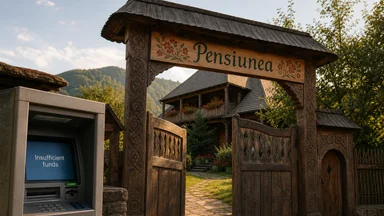
You book a charming farm stay in Maramureș through a major booking site. The listing says “pay at property.” You assume that means card. You arrive on a Saturday evening, tired and hungry, and the host smiles apologetically: no card terminal, only cash in Romanian lei. The nearest ATM is 30 kilometers away, and it probably ran dry by noon. A 2023 survey by the Romanian Tourism Board found that roughly 40% of rural guesthouses were cash-only, with no card terminal on site. In Maramureș, that figure climbs to 60%, meaning over half of the accommodations require physical lei.
Romania’s countryside runs largely on cash. In small towns, bank branches close by Friday noon, and ATMs are refilled only once or twice a week. Guesthouses, especially those in traditional villages, often lack card terminals. The problem worsens in peak season, when tourist numbers spike and cash demand outstrips supply. For instance, in August 2023, some villages in Maramureș reported that the only ATM ran out of cash by Friday evening for three consecutive weekends, leaving guests and locals alike scrambling.
The Weekend Cash Crunch That Catches Everyone Out
ATMs in rural Romania are not like those in Bucharest or Cluj. In small towns such as Sighetu Marmației or Viscri, the single ATM might hold only a limited amount of lei, often not replenished until Monday. By Saturday afternoon, many machines display a stark “insufficient funds” message. Guesthouses in Maramureș, for instance, are often family-run operations in converted farmhouses. The owners may not have a business bank account that supports card payments, or they might consider the terminal fees too high. In Sibiu county, some hostels accept cards but add a surcharge of 3–5%, which they justify as covering transaction costs. Others simply prefer cash to avoid paperwork.
Local banks in small towns close early on Friday. The Banca Transilvania branch in a village like Moșna may shut its doors at noon, and the staff might not return until Monday. Exchange offices, if they exist, often close on Sundays or offer poor rates—sometimes 5–10% below the official mid-market rate. Travelers who assume they can exchange euros at the last minute are in for a rude surprise.
This is not a conspiracy to inconvenience tourists. It is a reflection of how the local economy operates. Many rural Romanians use cash for daily transactions, from buying bread to paying the vet. Cards are common in cities but still a novelty in the countryside. The weekend cash crunch is a structural issue that no single policy change will fix soon.
How Locals Actually Handle Payment in the Countryside
Romanians who live in or frequently visit rural areas have developed strategies. One common practice is to withdraw a week’s worth of lei from a city ATM before heading to the countryside. Many keep a stash of cash at home for weekend expenses. When they stay at a guesthouse, they often pay in advance via bank transfer—a method that avoids the need for cash on arrival.
In Brașov county, some guesthouses accept payments through Revolut or PayPal, especially those that cater to international guests. But this is not universal. A guesthouse owner near Bran Castle told me she prefers cash because “the money is in my hand, no waiting for transfers.” She also mentioned that she sometimes accepts euros at a fair rate if the guest has no lei, but she sets the exchange rate herself.
Barter is rare in modern Romania, but small debts are sometimes settled after the weekend. For example, a guest who arrives without cash might agree to pay the host on Monday, after the bank opens. This requires trust on both sides and works best if the guest has a known reputation or a referral. For a first-time visitor, it is a risk.
Locals also know which ATMs in larger towns are more reliable. For instance, the BRD ATM in Târgu Mureș is known to be refilled on Saturdays, while the one in Reghin often runs out by Friday evening. This kind of insider knowledge is hard to find online, but asking a local shopkeeper or your host can save you a long drive.
What the Booking Sites Don't Tell You About Payment
Booking.com and Airbnb are the main platforms for rural guesthouse bookings in Romania. Both allow hosts to set payment policies, but neither enforces clear communication about cash-only requirements. A listing that says “pay at property” might mean cash, card, or even a bank transfer. The fine print is often buried in the house rules or in a paragraph of reviews.
Airbnb listings, for instance, rarely mention cash requirements in the “Things to know” section. Instead, a review from a previous guest might say, “Bring cash, no card accepted.” But if you skim reviews for location or cleanliness, you can miss it. A 2022 analysis of 200 Romanian rural listings on Airbnb found that only 12% explicitly stated the payment method in the description. The rest left it ambiguous.
Online travel agencies sometimes charge bookings in euros, then the host converts the amount to lei at a rate that disadvantages the guest. For example, a room listed at €30 might be converted to 150 lei at a rate of 5.0, while the market rate is 4.9. The difference is small, but it adds up. Worse, if the host then asks for cash in lei, the guest pays twice—once to the booking site and once in cash—unless they cancel or dispute.
The Romanian Tourism Board survey also noted that 40% of rural guesthouses were cash-only, but the figure varied by region. In Maramureș, it was closer to 60%. In Brașov county, around 30%. The problem is worst in areas with low banking infrastructure. Booking sites do not filter by payment method, so travelers must do their own homework.
The Real Cost of Running Out of Cash on a Sunday
When you run out of lei on a Sunday, the consequences go beyond inconvenience. The closest working ATM might be in a larger town 30 or 40 kilometers away. If you are without a car, you rely on infrequent buses or expensive taxis. A round trip can cost you half a day and 50–100 lei in transport alone.
Private currency changers near tourist sites, such as the Peleș Castle parking lot, charge spreads of up to 10%. They know you are desperate. A traveler I spoke with reported exchanging €50 at such a booth and receiving only 220 lei when the market rate would have given her 245. That is a 10% loss, effectively making her €30 room cost €33.
Borrowing from the host creates awkward social debt. Some hosts are generous and will lend cash, but it puts the guest in an uncomfortable position. Others may refuse, leaving the guest to scramble. In a few reported cases, guests have had to skip meals or cancel activities because they could not pay. A reader from Cluj told me she skipped a planned horse-cart ride in Viscri because she had no cash left for the driver.
ATM fees also add up. If you withdraw from a different bank’s ATM, you may pay a fee of 10–15 lei per transaction. If you make multiple small withdrawals, the fees can equal a night’s accommodation. A traveler from the UK reported paying £50 in fees and unfavorable exchange rates for a £30 room because he had to withdraw three times from different ATMs.
Regional Variations: Not All Rural Areas Are Equal
The cash crunch is not uniform across Romania. In Maramureș, the situation is most acute due to low banking density and high tourist demand in summer. In Brașov county, which includes popular destinations like Bran and Râșnov, more guesthouses accept cards, but cash-only still dominates in smaller villages like Viscri. In Sibiu county, some guesthouses in the Transylvanian Saxon villages (e.g., Biertan, Alma Vii) have started using mobile card terminals from services like iPay, but adoption is slow. In the Danube Delta, where access is limited, cash is king, and ATMs are rare; visitors often need to bring enough lei for their entire stay.
Consider the experience of a German couple who stayed in a guesthouse in the village of Săpânța, near the Merry Cemetery. They arrived on a Saturday with only euros. The host directed them to a neighbor who exchanged euros at a rate 5% below the market rate, but it was better than driving 30 km to Sighetu Marmației. Another traveler from Poland, staying in a farm stay in Bran, paid via Revolut after the host provided a QR code. These workarounds exist but are not guaranteed.
In the Apuseni Mountains, guesthouses are even more remote. One hiker reported that the only ATM in the area (in the town of Huedin) was out of order for a full week in July 2023. He had to rely on a local shopkeeper who accepted a bank transfer in exchange for lei. The shopkeeper charged no extra fee, but this was a favor, not a service.
Three Things You Can Do Before You Arrive
First, ask the host directly: “Do you accept card? If not, cash only?” Send a message through the booking platform or via email. Most hosts are honest and will tell you. If they say “cash preferred,” take it as a warning. Some hosts may say “card possible” but then add that the terminal is broken—so have a backup plan.
Second, withdraw lei from a city ATM before heading to the countryside. In Bucharest, Cluj, Sibiu, or Brașov, ATMs are well-stocked and offer fair exchange rates. Withdraw enough to cover accommodation, meals, and activities for your entire rural stay. To gauge how much you might need, check current prices for guesthouses and meals online—many guesthouses list rates on their websites or social media pages. A general guideline is to plan for lodging plus meals and small purchases; typical guesthouse rates range from around 100 to 250 lei per night, and a meal at a local restaurant might cost 30–60 lei. Adjust based on your itinerary.
Third, carry a mix of denominations. Small notes—10, 50, and 100 lei—are useful for paying for a meal or a souvenir. Large notes of 200 or 500 lei can be hard to break in small villages. Also bring a backup card from a different bank in case your primary card is declined or swallowed by an ATM. Revolut and Wise cards work well and offer competitive exchange rates, but they still require a working ATM to withdraw cash.
Finally, check if the guesthouse accepts bank transfers via Revolut or Wise. Some hosts are set up for this, especially those who deal with foreign guests regularly. If you can transfer the amount before you arrive, you avoid the cash problem entirely. But this requires planning and a reliable internet connection.
What to Do When You're Already Stuck Without Lei
If you arrive and find yourself cashless on a Sunday, start by asking the host if they know a neighbor who can exchange euros or dollars. In tight-knit rural communities, someone usually has a stash of lei. The host might also accept a bank transfer once you have internet access. Many guesthouses now have Wi-Fi, so you can log into your banking app and make a transfer in real time.
Visit the local bakery or grocery store. Small shops sometimes change money informally, though the rate may be slightly worse than the bank. They are more likely to help if you buy something. A loaf of bread costs 3–5 lei, and the shopkeeper might exchange €20 at a fair rate as a courtesy.
Use a ride-hailing app like Uber or Bolt to reach the nearest town with a working ATM. In Brașov county, for example, the town of Codlea has a reliable ATM. The ride might cost 30–50 lei, but it beats being stranded. Alternatively, ask your host if they know a taxi driver who can take you to an ATM and wait while you withdraw.
In a pinch, some guesthouses will accept euros at a fair rate. A cooperative farm near Viscri, for instance, accepted euros at the mid-market rate for a group of German tourists who had no lei. The owner said she preferred euros anyway because she planned to travel to Germany later. But this is not common, and the rate depends on the host’s goodwill.
Why This Wrinkle Matters More Than You'd Think
Cash shortages can turn a relaxing rural retreat into a stressful negotiation. The problem is worse in summer, when tourist numbers spike and ATMs empty faster. In August 2023, some villages in Maramureș reported that the only ATM ran out of cash by Friday evening for three consecutive weekends. Local businesses suffered because tourists could not pay for meals or souvenirs.
Romania’s rural economy still runs on cash, and that is not changing soon. The cost of installing and maintaining a card terminal is prohibitive for many small guesthouses. The monthly fee can be 50–100 lei, plus a per-transaction fee of 1–2%. For a guesthouse that hosts ten guests a month, that might not be worth it. As one owner in Sibiu county told me, “Cash is simple. No machine, no receipt, no problem.”
Ignoring this detail can double your accommodation cost unexpectedly. Between ATM fees, poor exchange rates, and extra transport, a €30 room can easily become €60. More importantly, it affects your experience. Instead of relaxing, you spend hours hunting for cash. You miss a hike or a village festival because you cannot pay the entrance fee.
Knowing the local cash culture is part of traveling responsibly. It is not about being paranoid; it is about being prepared. The same principle applies in many rural destinations worldwide, from the Mont Saint-Michel causeway to the Stromboli ferry. Each destination has its own practical wrinkle. In Romania, it is the weekend cash crunch. So before you pack, ask yourself: have I got enough lei to last until Monday?